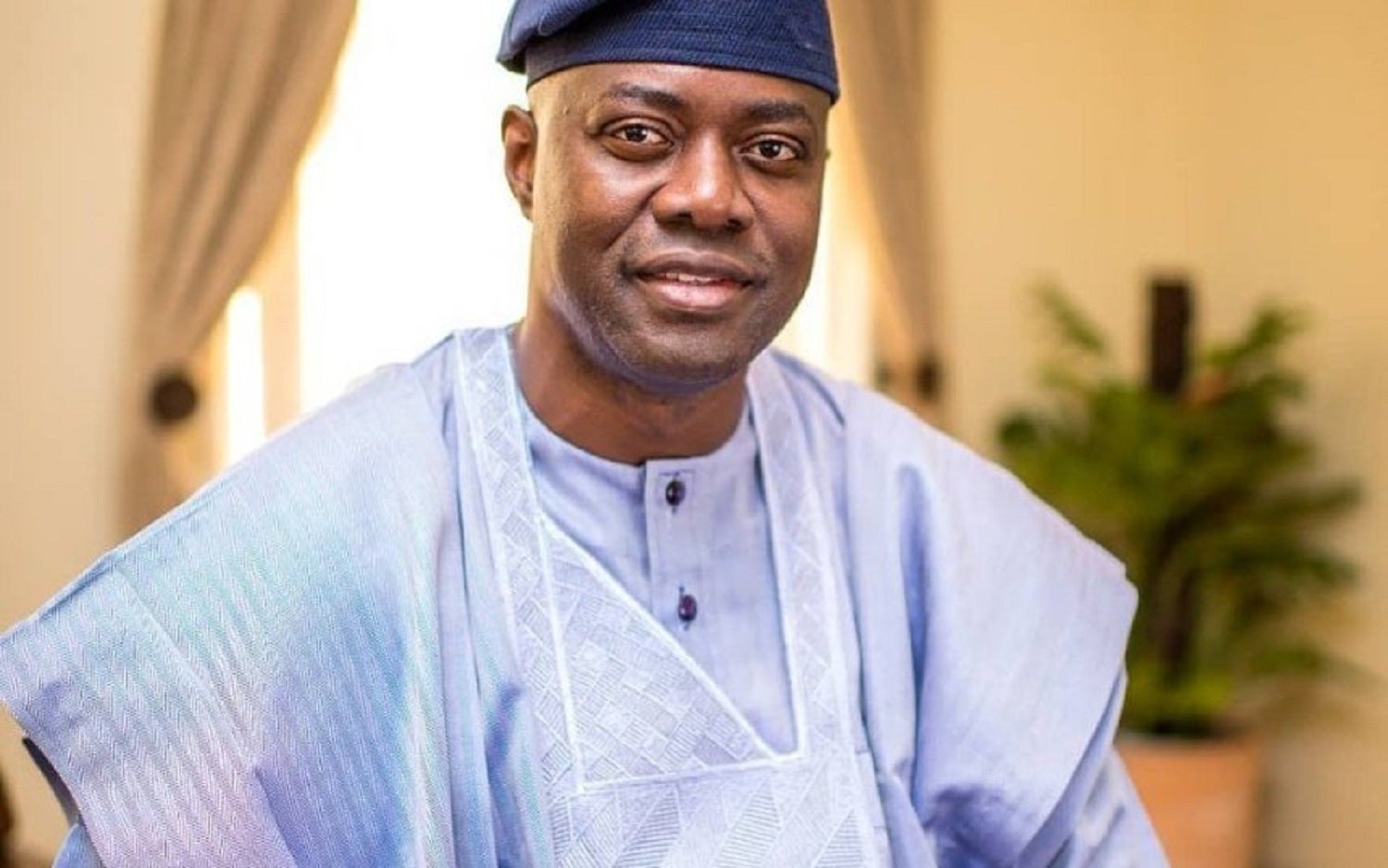
MAKINDE’S PRESIDENTIAL PROJECT: AMBITION IS NOT READINESS! THE BURDEN OF PROOF IS ON HIM! BY LANRE OGUNDIPE
BY LANRE OGUNDIPE
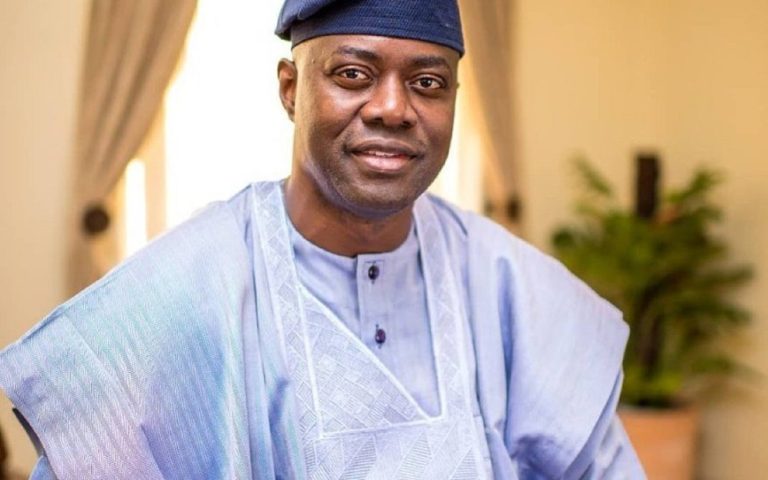
GREATRIBUNETVNEWS –GOVERNOR Seyi Makinde’s presidential project has now moved from whispers to a formal electoral contest. He is now the presidential candidate of the Allied Peoples Movement, with Lawal Musa Daura as his running mate.
Let us be blunt.
There is ambition. And there is capacity.
One is dreaming of Aso Rock. The other is proving you can carry Nigeria on your shoulders.
Nurturing Ambition Is Easy. Carrying Nigeria Is Another Matter! Visibility Is Not Credibility! Managing Oyo Is Not Governing A Federation!
His journey has been bold. Strategic alliances. Public disagreements. Determination to stay relevant. An image of a governor willing to challenge established political arrangements, including those within his own party.
Now that ambition extends beyond Oyo State, his record deserves examination. Not as personal hostility. As a legitimate assessment of a public officer.
The first major question: his role in the G5 rebellion and the crisis that weakened the Peoples Democratic Party before the 2023 general election.
The G5 governors, led politically by Nyesom Wike, challenged the leadership and presidential nomination arrangements of the PDP. Their grievance centred on the party’s refusal to address the national chairmanship question and what they regarded as failure to observe fairness and balance following the emergence of Atiku Abubakar as presidential candidate.
THE KNOCKOUT BELL: AMBITION IS NOT READINESS! CANDIDACY IS NOT CREDIBILITY! MAKINDE MUST PROVE HE CAN CARRY NIGERIA!
THE FULL TEXT BY LANRE OGUNDIPE
MAKINDE’S PRESIDENTIAL PROJECT: THE BURDEN OF PROOF BY LANRE OGUNDIPE
BY LANRE OGUNDIPE
GREATRIBUNETVNEWS –THERE is a difference between nurturing a presidential ambition and demonstrating the political, institutional and moral capacity to carry the burden of national leadership. The first is an expression of personal aspiration. The second requires a demonstrable record, a coherent political philosophy, a credible national platform and the ability to persuade a country that the candidate understands both the opportunities and the dangers of governing it.
Governor Seyi Makinde’s presidential project raises precisely this distinction. His political journey has been marked by bold interventions, strategic alliances, public disagreements and an evident determination to remain relevant in the national political conversation. He has cultivated an image of a governor willing to challenge established political arrangements, including those within his own party.
His emergence as the presidential candidate of the Allied Peoples Movement, with Lawal Musa Daura as his running mate, has moved that ambition from speculation into a formal electoral contest. But presidential candidacy is not the same as national readiness. Political visibility does not automatically translate into political credibility, just as the ability to manage a state does not, by itself, establish the capacity to govern a complex federation.
Makinde’s record therefore deserves examination, not as an exercise in personal hostility, but as a legitimate assessment of a public officer whose ambitions now extend beyond Oyo State.
The first major question concerns his role in the G5 rebellion and the crisis that weakened the Peoples Democratic Party before the 2023 general election.
The G5 governors, led politically by Nyesom Wike, challenged the leadership and presidential nomination arrangements of the PDP. Their principal grievance centred on the party’s refusal to address the question of its national chairmanship and what they regarded as the failure to observe fairness and balance following the emergence of Atiku Abubakar as the party’s presidential candidate.
The disagreement was not without political substance. The demand for fairness in party leadership and the distribution of political responsibility was a legitimate subject for internal democratic contestation. But the manner in which the disagreement was pursued had consequences that extended far beyond the party’s internal arrangements.
The G5 effectively withheld support from their party’s presidential candidate. Their actions contributed to the fragmentation of the PDP’s electoral strength at a critical moment in the country’s political history.
Makinde was one of the governors associated with that rebellion. He was not merely a distant observer. His participation placed him among those whose decisions helped shape the political environment in which the PDP entered the 2023 election.
The question is not whether the G5 had the right to disagree with their party’s leadership. They did. The question is whether the political consequences of their actions were adequately considered, and whether the principles invoked at the time have been applied consistently since.
A political leader cannot demand fairness when it serves his immediate interest and treat the same principle as negotiable when circumstances change. Political conviction is tested not only by the causes one champions, but also by the consistency with which one applies them.
Makinde’s political conduct during the 2023 election also raises questions about the relationship between political strategy and ideological consistency. Although he remained a PDP governor, he supported Bola Tinubu’s presidential aspiration. This was a significant political choice, particularly given the fierce contest between the PDP and the All Progressives Congress.
There is nothing inherently improper about a politician supporting a candidate outside his party. Nigerian politics has always accommodated alliances and personal political preferences that do not necessarily follow party boundaries. But such decisions carry political consequences and invite questions about the principles behind them.
Makinde’s subsequent criticism of the Tinubu administration, particularly over economic management and national policy, has to be understood against that background.
A politician is entitled to reassess an alliance. Circumstances change, governments make decisions, and political support is not a lifetime obligation. Yet a leader seeking the presidency must be able to explain the basis of his earlier choices and the circumstances that produced his subsequent disagreements.
The issue is not that Makinde once supported Tinubu and now criticises him. The issue is whether his political decisions reflect a consistent understanding of national interest or a sequence of tactical calculations shaped by changing political opportunities. The electorate has a right to know.
His eventual emergence on the APM platform also demands examination. The political understanding between Makinde and the Turaki-led PDP faction arose against the background of the continuing crisis within the PDP. Disagreements over party leadership, competing claims to legitimacy and the rejection of the arrangement by the Wike camp exposed the depth of the party’s divisions.
There is an important distinction between a political alliance, an understanding between factions and a legally completed party merger. These are not interchangeable descriptions. Makinde’s emergence as the APM candidate is an established electoral fact, but the political circumstances that brought him there remain relevant to assessing his judgement and consistency.
The APM provides him with a recognised platform. The more demanding question is whether the party possesses the nationwide organisational structure, political alliances, financial capacity and electoral machinery required to compete effectively.
A presidential contest is not won by the enthusiasm of a few influential individuals. It requires a formidable network of political actors, credible candidates across the states, a coherent message and the capacity to mobilise voters in a country of considerable geographical, ethnic, religious and political diversity. Makinde must demonstrate that his candidacy represents more than a personal political vehicle. Nigerians need to understand the political and organisational foundation on which he hopes to build a national administration.
His Reset Nigeria agenda provides another opportunity to define the substance of his ambition. Unlike a mere campaign slogan, it has now been presented as a manifesto organised around four principal pillars: the economy, security, education and socio-political development.
Its proposals include reducing the structural costs of living, investing in infrastructure that connects production to markets, strengthening intelligence and security coordination, improving educational outcomes and devolving more powers within the federation.
These are important areas of national concern. Some of the proposals also reflect policy positions Makinde has advanced during his years in office in Oyo State. But the publication of a manifesto does not conclude the debate. It begins the more serious examination of its feasibility.
How will the proposed economic reforms be financed? What institutional arrangements will support the reduction of the cost of living? What constitutional and legislative changes would be required to implement the proposed devolution of powers? How will intelligence sharing and operational coordination be improved without creating competing security structures? What measurable learning standards will determine whether the education reforms are succeeding?
The manifesto must also explain the relationship between its national proposals and the experience of the Oyo State administration. Which policies have produced demonstrable results? Which have encountered difficulties? What lessons have been learnt, and what would be done differently at the national level?
A presidential candidate must go beyond identifying national problems and announcing desirable outcomes. He must demonstrate an understanding of the institutional, financial and political obstacles that have frustrated successive administrations.
The country has heard enough declarations of national renewal. What Nigerians require is a credible governing programme, supported by measurable objectives, realistic financing, institutional safeguards and a clear understanding of the sacrifices that reform may demand.
Makinde’s supporters are entitled to present his Oyo experience as evidence of his capacity to lead. That argument deserves consideration. It also makes an independent examination of his record in Oyo indispensable.
His administration has presented infrastructure development, road construction, education, healthcare and improvements in internally generated revenue as important elements of its achievements. These claims deserve recognition where supported by evidence. Public policy assessment should not become an exercise in denying every achievement simply because the administration is politically contested.
But a development record is not measured by the number of projects announced, commissioned or displayed in official publicity. It must also be assessed by cost, quality, durability, distribution, economic value and the extent to which projects respond to the needs of the people.
The same standard applies to public finance. A government must demonstrate not only that it has spent money, but that the resources were raised responsibly, deployed transparently and converted into measurable public benefit.
Makinde’s own presentation of Oyo State’s internally generated revenue has emphasised the improvement from the levels inherited in 2019. In his presentation of the 2027 budget, he cited IGR of approximately ₦103.25 billion for 2025, compared with approximately ₦26.59 billion in 2019. That represents a substantial improvement on the figures he presented. But the public deserves the underlying revenue records, the composition of the revenue and an assessment of how much of the growth is sustainable.
The proposed 2027 budget is approximately ₦1.115 trillion, with capital expenditure of about ₦670.03 billion and recurrent expenditure of approximately ₦445.31 billion. The capital component represents about 60 per cent of the proposed budget. Infrastructure, education and health account for significant allocations.
These are proposals, not evidence of expenditure already made. The governor himself acknowledged the limitations imposed by the approaching end of his tenure on 29 May 2027. The distinction between a proposed appropriation, an approved budget, actual releases and completed projects must remain clear. A proposed budget can express ambition. Only implementation can establish performance.
The financial position of Oyo State deserves particular attention, not because borrowing is inherently wrong, but because the scale, structure and transparency of public borrowing are central to the question of fiscal responsibility.
The State’s 2024 audited financial statements were prepared on the IPSAS cash basis of accounting. The report records actual recurrent receipts of approximately ₦490.89 billion against a budgeted provision of approximately ₦372 billion, representing 131.96 per cent performance. Actual capital receipts, however, amounted to approximately ₦31.59 billion against a budgeted provision of approximately ₦187.99 billion, representing only 16.80 per cent performance. Actual capital expenditure was approximately ₦184.73 billion against a provision of approximately ₦298.97 billion, representing 61.79 per cent performance.
These figures show a significant difference between the State’s performance in recurrent receipts and its performance in capital receipts. They also demonstrate why budgetary provisions must not be confused with money actually received or spent.
The question of public debt requires a separate and carefully defined examination. The Debt Management Office’s published figures show Oyo State’s domestic debt stock at approximately ₦89.91 billion at the end of 2024. The State’s own debt sustainability assessment also records external debt of approximately ₦68.65 billion in naira equivalent at that date. These figures place the total reported debt portfolio at approximately ₦158.56 billion at the end of 2024.
The State’s debt sustainability assessment describes the portfolio as sustainable under the assumptions used in its projections. That assessment deserves consideration. It also warns that recurrent expenditure needs to be reduced to prevent pressure on the deficit, debt stock and debt-service obligations. A sustainability projection is not a guarantee against future fiscal pressure. Its conclusions depend on assumptions about revenue, expenditure, borrowing and economic conditions.
The appropriate questions are therefore not simply how much the State has borrowed, but how the borrowing is structured, what it has financed, what assets have been created, what debt service is required and whether the resulting investments will generate sufficient economic and social returns.
The Auditor-General’s certificate for 2024 gives an unqualified opinion on the State’s financial statements prepared on the IPSAS cash basis. That opinion is important and should be acknowledged. It does not, however, amount to a blanket endorsement of every policy decision or establish that every public project has delivered value for money.
The State’s financial records must be assessed alongside its debt disclosures, budget performance and actual project delivery. Citizens should be able to trace the relationship between public borrowing, expenditure and the benefits received.
The issue is not to condemn borrowing as a policy instrument. Governments borrow to finance infrastructure and other investments where the economic case is sound. The obligation is to demonstrate that borrowing is transparent, economically justified, properly accounted for and connected to public benefit.
A government seeking national leadership must be prepared to explain not only its development achievements but also the financial commitments behind them. The burden of proof is not satisfied by announcing the number of roads constructed or projects initiated. It also requires a credible account of the resources deployed, the obligations incurred and the value delivered to the people.
Makinde’s presidential ambition must also be considered against the electoral realities of the South-West and the wider country. The region is politically significant, but it is not a single electoral bloc whose votes can be transferred automatically to any candidate from the region. The political identities, party loyalties and voting patterns of Lagos, Ogun, Oyo, Osun, Ondo and Ekiti differ. Even within individual states, political support is shaped by local interests, party organisation, candidates and the prevailing national mood.
Makinde’s position in Oyo may give him an important political base. It does not automatically confer leadership of the region. The APC has an established political structure in the South-West, while the PDP retains networks and support in parts of the region. Other political platforms may also attract support, depending on their alliances and the candidates they present.
Beyond the South-West, the challenge becomes more demanding. A presidential candidate must build bridges across the North, South-East, South-South and the Middle Belt. He must negotiate the complexities of religion, ethnicity, regional expectations and political representation without reducing national politics to a transaction among powerful individuals.
The question is straightforward: what is the national coalition behind Makinde’s ambition, and what makes it durable? A presidential project cannot rest on the assumption that regional identity, personal relationships or dissatisfaction with the incumbent administration will automatically translate into votes. Electoral support must be organised, persuaded and earned.
There is also the question of succession and the relationship between Makinde’s national aspirations and the political arrangements within Oyo State. A governor approaching the end of his tenure must address succession with a sense of institutional responsibility. The state belongs to its people, not to the incumbent or his political associates. The process of choosing a successor is a legitimate political contest, but it must not undermine the independence of public institutions or the rights of citizens to make their own choices.
The same principle applies to political alliances. Their value should be judged by the principles, programmes and institutional commitments that sustain them, not merely by the offices or electoral advantages they promise. A politician who seeks to lead a country must understand the distinction between party loyalty, personal loyalty and public responsibility.
The presidency is not an extension of a state political structure, just as a state government is not the private property of its governor. The transition from state leadership to national ambition requires restraint, confidence in institutions and an appreciation of the limits of executive power.
Makinde’s presidential project should not be dismissed simply because it is ambitious, nor should it be endorsed merely because he has been an influential governor. His supporters are entitled to make the case for him. His critics are equally entitled to examine his record. The responsibility of public commentary is to subject both the claims and the criticisms to evidence.
What is the ideological foundation of his political journey? What lessons has he drawn from the G5 rebellion and the PDP crisis? How does he reconcile his earlier political choices with his present criticisms? What is the practical substance of Reset Nigeria? What organisational strength does the APM bring to a presidential contest? What does Oyo’s governance and financial record reveal about the administration’s priorities, obligations and capacity for transparent management?
These are not hostile questions. They are the ordinary demands of democratic accountability.
The presidency is not a reward for political audacity, a prize for surviving party crises or an extension of personal influence. It is a constitutional trust involving the lives, resources and future of more than two hundred million Nigerians.
Makinde may well believe that his experience in Oyo has prepared him for the national assignment. That is his right. But the electorate must be allowed to decide on the strength of evidence, not political theatre.
A presidential candidate must offer more than a compelling personal story. He must demonstrate judgement, consistency, competence, institutional respect and a credible understanding of the country he hopes to govern.
The burden of proof rests with the candidate. It cannot be transferred to the electorate.
—
POSTSCRIPT: THE WEIGHT OF AN UNGUARDED STATEMENT
There is one further dimension of Makinde’s political journey that deserves reflection.
During his presentation of the 2027 budget to the Oyo State House of Assembly on 10 November, the governor urged lawmakers to be careful about their actions towards him. He reminded them that he would remain in office until 29 May 2027 and added that, even if he moved to Abuja after the elections, he could still do something in Oyo State between February and May that people would never forget.
The context matters. He was addressing members of the Assembly and presented the remark in a humorous vein, drawing on an anecdote about a secondary-school teacher who had flogged his students and told them they would not forget the experience. That explanation should be acknowledged. It would be unfair to detach the words entirely from the story he was telling or to present them as an established threat against the people of Oyo State.
Yet context does not make the choice of words inconsequential.
A governor’s relationship with the legislature will naturally involve disagreements, political competition and, at times, sharp exchanges. Members of the Assembly are not expected to surrender their independence because the governor has political ambitions beyond the state. Nor should public servants, political opponents or citizens have reason to interpret disagreement with the government as a source of personal apprehension.
The governor may have intended humour, but public office gives words a weight beyond the speaker’s immediate intention. At a time when Oyo is approaching an important political transition, clarity, restraint and reassurance are more valuable than ambiguity.
The remaining months of an administration should be devoted to completing legitimate responsibilities, protecting public institutions and ensuring an orderly handover. That obligation applies to the governor, the legislature, political parties and every public officer entrusted with the affairs of the state.
Makinde’s presidential candidacy will inevitably invite scrutiny of his record, judgement and understanding of public authority. Power is a temporary trust, not a personal possession. For anyone seeking the highest office in the land, the manner in which that trust is discussed and exercised is itself part of the test of leadership.
Ogundipe, Public Affairs Analyst, former President Nigeria and Africa Union of Journalists writes from Abuja.



About the Author