FIX ACCESS — AND THE BARRELS AND THE POWER WILL FOLLOW–NAEC COMMUNIQUE
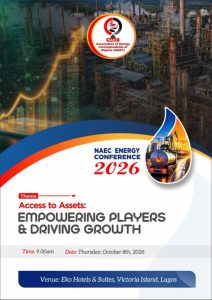
GREATRIBUNETVNEWS –Nigeria Has The Oil. Nigeria Has The Gas. Nigeria Has The Blocks. What We Don’t Have Is Access.
Let’s stop lying to ourselves.
Nigeria is not broke in energy. We are not short of oil. We are not short of gas. We are not short of blocks.
International oil companies left. Licensing rounds opened new blocks. Nigerian companies stepped up and took the assets.
And then? They hit a wall.
No capital to fund it. No infrastructure to move it. No approvals to unlock it. No predictable regulation to trust it.
Owning an asset in Nigeria today is like owning a farm with no road to the market, no tractor, no loan, and no buyer. The yam is in the ground. But you will still go hungry.
That is the blunt truth NAEC told Nigeria on October 8 in Lagos. And it is the truth every indigenous operator lives every day.
We don’t need another discovery. We need access — to money, to technology, to pipes, to markets, to skilled hands, to rules that don’t change overnight.
Give Nigerian players access, and they will turn reserves into barrels. Turn barrels into power. Turn power into prosperity.
Deny them access, and the reserves will stay in the ground while Nigerians stay in darkness.
THE VERDICT — ACCESS, NOT ASSETS:
“Nigeria’s Energy Gap Is About Access, Not Oil, Gas, Power Assets –NAEC Communique”
“Nigeria’s biggest energy problem is no longer owning oil and gas assets. It is getting access to them, funding them, and turning them into real barrels, real power and real prosperity.”
INDIGENOUS OPERATORS BLOCKED:
“–Indigenous operators blocked by finance, infrastructure, approvals despite IOC divestments”
WHAT THE COMMUNIQUE DEMANDS:
“–Communiqué demands transparent licensing, local funding, gas infrastructure to turn reserves into barrels and power”
THE CONFERENCE:
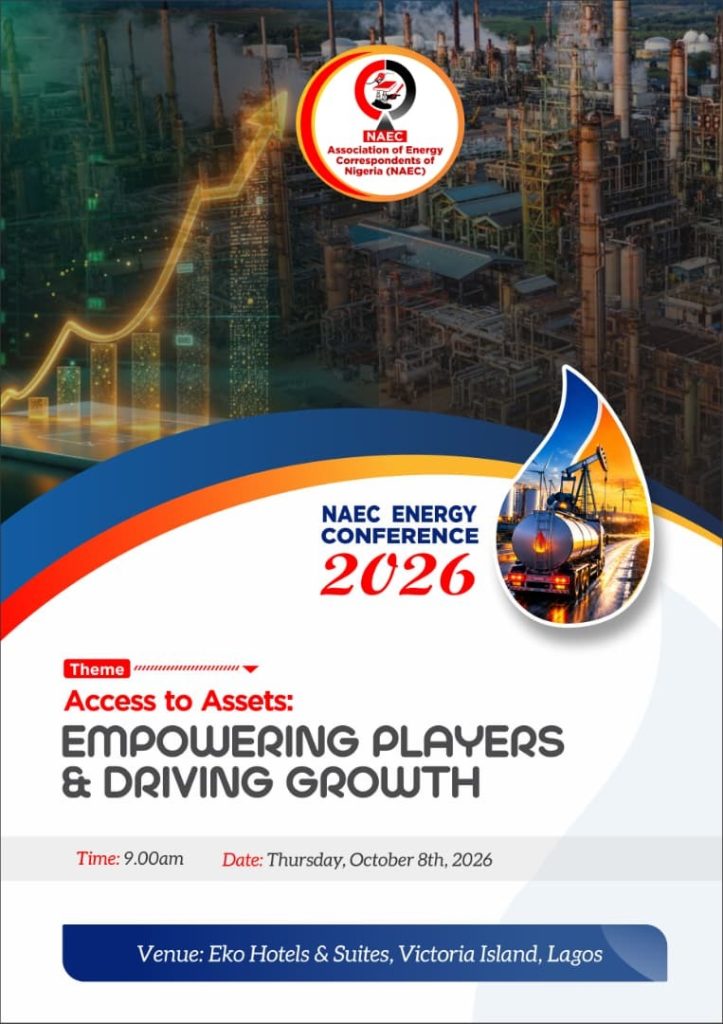
“That is the blunt verdict in the official communiqué from the Association of Energy Correspondents of Nigeria (NAEC) 2026 Energy Conference, themed ‘Access to Assets: Empowering Players and Driving Growth,’ held on October 8, 2026 in Lagos.”
ONE VOICE — OWNING IS NOT ENOUGH:
“The conference brought together policymakers, regulators, indigenous and international operators, service providers and industry associations, who spoke with one voice: owning an asset does not guarantee commercial success.”
WHAT REAL PARTICIPATION NEEDS:
“Meaningful participation, the communiqué said, requires access to capital, technology, infrastructure, markets, skilled personnel and predictable regulation. That message is urgent because Nigerian exploration and production companies have taken on greater responsibilities after international oil companies divested assets and successive licensing rounds opened new blocks.”
THE BOTTOM LINE:
Fix access — and the barrels and the power will follow.
Yet high entry costs, financing constraints, lengthy approvals and limited access to evacuation infrastructure and technology continue to restrict technically qualified indigenous operators.
The Federal Government was urged to remove structural barriers by establishing transparent, predictable and commercially viable processes for asset allocation, licensing and divestment, while ensuring qualified indigenous companies get fair opportunities.
Regulators were asked to strengthen policy consistency by implementing existing laws transparently, cutting administrative delays and giving timely decisions to support long-term investment.
For Austin Avuru, Executive Chairman of AA Holdings, the lesson comes from experience. Acquiring assets will not produce barrels without matching investment, infrastructure and execution capacity. Recalling the effort to build evacuation pipelines, he asked, “Can you imagine how long it took?” Turning assets into production, he said, needs access to gas, infrastructure and, above all, finance.
Indigenous operators were also told to do their part by strengthening corporate governance, financial management and long-term strategies that integrate exploration, reserve replacement, production growth and technological innovation.
On finance, the communiqué cited limited international financing for African hydrocarbons, high borrowing costs and weak project execution as threats to Nigeria’s ambition of three million barrels per day, unless domestic financing improves.
Mrs. Alero Balogun, General Manager, Corporate Communications, Oando Plc, said international lenders are pulling back from African energy because of operating risks, policy inconsistency and regulatory uncertainty. Until Nigeria de-risks its operating environment and mobilises local capital, asset access for indigenous players will stay constrained.
Government and financial institutions were urged to expand long-term funding and to encourage banks, pension funds and other institutional investors to explore commercially sound opportunities in the sector.
Dr. Obinna Ezeobi, General Manager, Corporate Communications, NCDMB, said over 130 indigenous companies have accessed more than $400 million through the Nigerian Content Intervention Fund. He also cited Project 100, which targets high-potential indigenous firms with capacity development, market access and financial linkages.
On local content, industry estimates show growth from about 5 percent in 2010 to about 61 percent. The next phase, the communiqué said, must move to technological ownership and global competitiveness through local manufacturing, research and development, equipment certification and technology transfer.
Dr. Joan Faluyi, Publicity Secretary of PETAN, said as indigenous operators take on more assets, indigenous service companies should be empowered to handle the operations.
On gas, the communiqué cited Nigeria’s estimated 215 trillion cubic feet of proven reserves, with opportunities in power, industrialisation, fertiliser, petrochemicals, LNG, LPG and CNG. But infrastructure gaps, uncertain commercial arrangements, payment risks and inadequate market access continue to hold back investment.
It called for accelerated development of strategic projects such as the Ajaokuta-Kaduna-Kano (AKK) and Obiafu-Obrikom-Oben (OB3) pipelines, and for coordinated investment to advance the Decade of Gas agenda.
On electricity, the conference said supply problems cannot be resolved by adding generation alone. Gas supply, transmission, distribution, maintenance, metering, revenue collection and payment security must improve together. DisCos were asked to accelerate metering, reduce losses and improve billing transparency.
The communiqué also urged reliable crude supply and competitive pricing to support domestic refining, warned that retail prices should not inflict hardship while refiners’ sustainability is factored in, and called for harmonised federal and state regulation to support mini-grids, solar, storage and hybrid systems under the Electricity Act 2023.
It closed with a call for host community development, human capital building through initiatives like the NAPE Academy, and independent, factual reporting to sustain transparency and investor confidence.



About the Author