
FROM PAPER TO PIPELINES! TOTALENERGIES BOSS DARES NIGERIA: TURN YOUR REFORMS TO REAL OIL MONEY

GREATRIBUNETVNEWS–THAT was the blunt message from TotalEnergies EP Nigeria boss, Matthieu Bouyer, as he challenged Nigeria’s oil and gas industry to stop worshipping reforms on paper and start delivering bankable projects that grow barrels and create wealth.
“Potential Won’t Save Us — Only Bankable Projects Will” — Matthieu Bouyer Thunders In Abuja
Potential is not production!
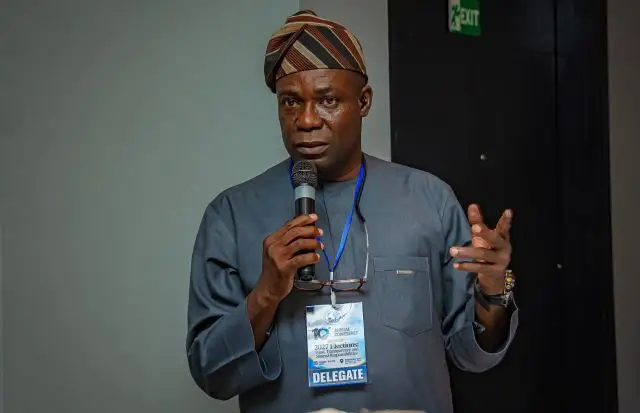
Speaking Wednesday at the 5th PENGASSAN Energy and Labour Summit (PEALS) 2026 at Transcorp Hilton, Abuja, the Country Chair and Managing Director said Nigeria has all it takes — vast reserves, world-class talent, deep industrial history, entrepreneurial spirit and huge domestic demand* — to remain a global energy powerhouse.
But, he warned: none of it matters without execution.
> “The real test is converting reforms into concrete projects, production growth and long-term value for Nigeria,” Bouyer declared.
The summit, running August 19–21, 2026 under the theme “Strengthening Regulatory Frameworks as a Catalyst for Stability and Growth in Nigeria’s Oil and Gas Industry,”is charting how regulation can unlock investment — not block it.
Delivering a keynote address titled “Removing Barriers to Business Growth in Nigeria’s Oil and Gas Industry: TotalEnergies as a Case Study of E&P Expansion Amid Bureaucratic Bottlenecks and Regulatory Uncertainties,” Bouyer said Nigeria’s oil and gas industry must focus on turning its potential into concrete projects, higher production and real value.
He added that gas resources should be converted into power, LNG, industrial growth and exports, while reforms must translate into stronger investor confidence.
“Nigeria does not lack potential,” Bouyer told the gathering of top government officials, regulators, operators, labour leaders and industry executives. “The real challenge is conversion.”
According to him, barriers that slow down projects do not affect companies alone, but also national revenue, jobs, local content, host communities, workers and the confidence of future investors.
The TotalEnergies chief executive said stability remained the first condition for growth in the sector. He noted that government creates stability through clear policy and effective regulation; regulators through predictable implementation; operators through disciplined investment and safe operations; labour through constructive engagement and industrial harmony; and communities through trust and shared responsibility.
He said industrial harmony as more than a labour matter, calling it “a business enabler” that supports safety, production, investment and people development. “If Nigeria wants long-term jobs,” he said, “it must create the conditions for long-term projects, a competitive industry and a stable environment in which investors, workers and communities can see a future.”
Bouyer pointed out that Nigeria now competes with other jurisdictions for global capital, adding that investors compare fiscal terms, regulatory stability, execution timelines, security, emissions intensity, cost structure and the probability of delivery before committing funds.
He said recent reforms, including the Petroleum Industry Act, fiscal incentives for non-associated gas and deepwater, measures to reduce contracting timelines, and efforts to improve cost competitiveness, showed that government recognised the need to attract investment and accelerate execution.
The TotalEnergies leader also pointed to recent exploration licensing rounds in 2024 and 2025 as important milestones in reopening exploration and attracting capital, describing exploration as “the renewal engine” of the industry. Without exploration, he said, resources decline, and future production, investment, employment and relevance are affected.
For TotalEnergies, Bouyer said Nigeria remained strategic and “home,” noting that the company had been present in the country since 1956 and that the company’s strategy was to focus on operated assets, where it could apply its technical superiority consistently, drive safety, operational excellence, emissions reduction and project execution, and create value for Nigeria, partners and stakeholders.
“In 2024, TotalEnergies and our partner, NNPC Limited, took FID on the Ubeta gas development,” he said, adding that the project showed what could happen when policy, partnership and project maturity came together. “Reform becomes real when it unlocks projects.”
On gas, Bouyer said the resource remained central to Nigeria’s future because it could support power generation, industry, domestic energy access, LNG exports and lower-emission production growth. But he stressed that gas projects required infrastructure, bankable contracts, credible offtake, payment discipline, timely approvals and commercial frameworks capable of attracting long-cycle investment.
He also linked emissions reduction to value creation, saying lower flaring, gas recovery, methane reduction and better measurement could preserve molecules for domestic use, export or integration into the gas value chain. According to him, energy development and environmental responsibility should not be seen as competing priorities, as both can contribute to value creation for Nigeria.
The TotalEnergies MD said the company became the first E&P operator in Nigeria to eliminate routine flaring across all operated assets at the end of 2023. He added that TotalEnergies was working with NNPC Limited on AUSEA, a drone-based technology for high-precision methane and CO₂ monitoring and had installed more than 2,500 sensors across its operated assets to support real-time methane leak detection and quicker action.
He commended PENGASSAN for creating a platform for dialogue among government, regulators, operators, investors, labour, host communities and other stakeholders. He said the association represented skilled professionals whose work, discipline and institutional memory were central to the functioning of the industry, adding that PENGASSAN was “not outside the investment conversation” but a fundamental part of it.
Earlier in a welcome address, PENGASSAN President, Festus Osifo, said the theme of the summit was deliberately chosen because investors required clear rules and predictability before committing capital to long-term projects. He warned that regulatory uncertainty and overlapping mandates among government agencies were threatening investment in Nigeria’s oil and gas industry.



About the Author