FG HITS IBADAN WITH 17.7MW POWER JACKPOT – IWO ROAD CORRIDOR SET FOR 20-HOUR ELECTRICITY REVOLUTION!
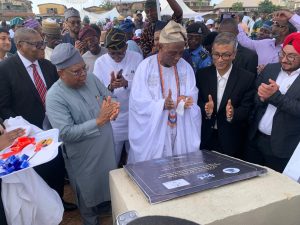
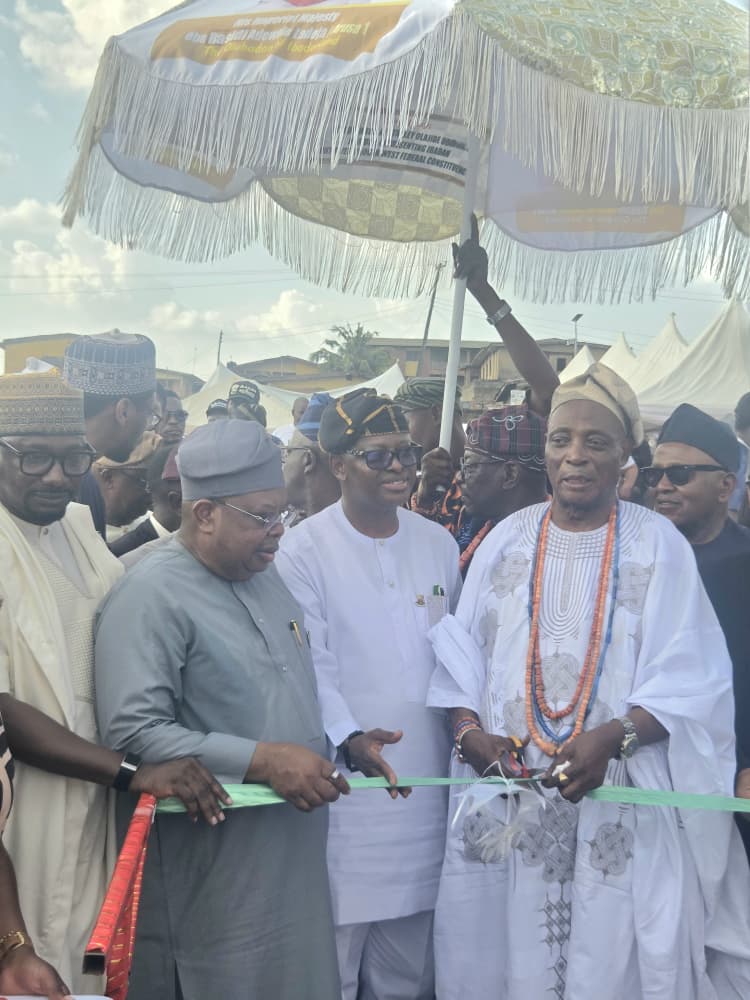
GREATRIBUNETVNEWS –IN a decisive move to shatter supply gaps and inject new power into Nigeria’s economic nerve centres, the Federal Ministry of Power through the Rural Electrification Agency, REA, has broken ground for a massive 17.7MW Interconnected Mini-Grid in Ibadan, Oyo State.
As Paras Energy Leads FG’s Decentralized Power Push To Supercharge Local Economy
The high-impact project, being developed by Paras Energy & Natural Resources Development Limited, is strategically sited to power five bustling communities along the Iwo Road axis – Bola, Jiboye, Ogo-Oluwa, Molade-Adelubi and Sooko Elega.
This is not just another power project. It is a direct assault on unreliable supply, designed to complement the national grid by planting generation capacity right at the doorstep of demand.
When fully operational, residents and businesses in the corridor will enjoy a guaranteed minimum of 20 hours of electricity daily– a game-changer for traders, artisans, industries and households.
Speaking at the groundbreaking, the Honourable Minister of Power, Mr. Joseph Tegbe, declared the project as proof that the Tinubu administration is converting power promises into tangible assets that fuel productivity.
In his words:
“Our objective is clear: to increase the quantum of electricity available to Nigerians, improve the reliability of supply and ensure that electricity becomes an enabler of productivity, investment and economic growth. Projects such as this demonstrate how we are translating that commitment into infrastructure that directly serves communities and productive economic clusters.”
WHY IT MATTERS:
The Iwo Road mini-grid is part of a growing pipeline of interconnected mini-grids nationwide – a new FG model that moves power from distant transmission lines to the heart of commercial clusters, where it is needed most to drive jobs, growth and prosperity.
The Ibadan project builds on a growing portfolio of interconnected and isolated mini-grid interventions being implemented by the REA across the country. The Agency has previously performed groundbreaking and advanced deployment of interconnected mini-grid projects in several locations, including Pankshin in Plateau State; Kofare, Mbamba and Saminaka in Adamawa State; and other strategic locations across the country.
These interventions represent an important evolution in Nigeria’s distributed energy market: from smaller access-focused systems towards increasingly larger decentralised generation assets capable of supporting communities, commercial clusters and productive users while complementing existing distribution infrastructure.
The Minister noted that this approach is being pursued alongside ongoing Federal Government interventions to strengthen generation, transmission and distribution infrastructure across the country. Planned and ongoing improvements across key electricity corridors are expected to progressively reinforce the reliability and resilience of Nigeria’s electricity supply architecture.
In his remarks, the Managing Director/Chief Executive Officer of the Rural Electrification Agency, Dr. Abba Aliyu, said the 17.7MW Ibadan project reflects the scale and ambition of the new generation of distributed renewable energy projects being developed under President Bola Ahmed Tinubu’s Renewed Hope Agenda.
He explained that REA’s priority is increasingly centred on deploying generation capacity where it can deliver the greatest economic impact while leveraging private-sector investment and sustainable operating models.
«“This groundbreaking is about more than 17.7 megawatts of new generation capacity. It is about what that capacity will enable. Reliable electricity means longer operating hours for businesses, lower dependence on expensive self-generation, increased productivity, new investment and ultimately more jobs and economic opportunities.”»
Aliyu added that the Ibadan project forms part of a much larger pipeline of investments being facilitated by the Agency.
“Across Nigeria, we are demonstrating that distributed energy can move beyond addressing electricity access alone to becoming an important pillar of electricity reliability and economic development. From the interconnected mini-grids we have already broken ground on in different parts of the country to the new generation capacity now coming into Ibadan, our objective remains consistent: reliable electricity that powers productive economies.”
Upon completion, the Ibadan project will include the deployment of 18 new transformers to strengthen electricity distribution within the beneficiary communities.
REA is also advancing an additional 17.7MW of projects in Ibadan, targeted at strategic institutions and economic centres including the University College Hospital, University of Ibadan and The Polytechnic, Ibadan. Together, these interventions demonstrate a deliberate strategy to build clusters of reliable generation capacity around communities, public institutions and centres of economic activity.
The Olubadan of Ibadan, Oba Rashidi Adewolu Ladoja, commended the Federal Government for the intervention, noting that improved electricity supply would positively affect businesses, households and livelihoods across the beneficiary communities.
He expressed appreciation to President Bola Ahmed Tinubu for the infrastructure projects being implemented across Oyo State and called for their timely completion.
Also speaking, the Managing Director of Paras Energy & Natural Resources Development Limited, Yashwant Kumar, reaffirmed the company’s commitment to delivering the project efficiently and to the required standards, noting that reliable electricity would have a transformative impact on residents and businesses within the project area.
The Ibadan groundbreaking reinforces the Federal Government and REA’s commitment to a power-sector strategy in which new generation capacity, stronger networks, decentralised energy infrastructure and private-sector investment work together to improve reliability of supply.
For REA, the ultimate measure of success is not simply the number of megawatts installed, but the economic activity those megawatts unlock businesses powered, productive hours expanded, jobs supported, investments attracted and communities transformed through reliable electricity.



About the Author